
AI Can't Build Your Pipeline—Here's What Will
Comprehensive Overview of Significant Developments In the past week, key developments in brand building, scaling strategies, and growth hacking emphasize AI-driven personalization, **full-f...

|
Welcome to BrandOn Growthlab!
Pilgrim grew 24x. Harvey hit $190M ARR. OpenEvidence captured 40% of doctors. Their secret wasn’t more leads—it was better positioning, employee-driven content, and creator-powered distribution. This week: the exact playbooks they used, with CAC benchmarks you can steal.
What’s in this issue:
- 🚀 How Pilgrim grew 24x while slashing CAC by 40%—the employee creator playbook
- 🎯 Harvey’s $190M ARR strategy: vertical depth + internal influencer program
- ⚡ The death of the middle: why you must choose massive scale or deep specialization
- 📊 Stop tracking clicks, start tracking pipeline: retention metrics that actually matter
- 💰 Performance-based affiliate models for early-stage brands (without burning cash)
🔗 Pilgrim’s 24x Growth: The Employee Creator Program Behind It (14 minute read)
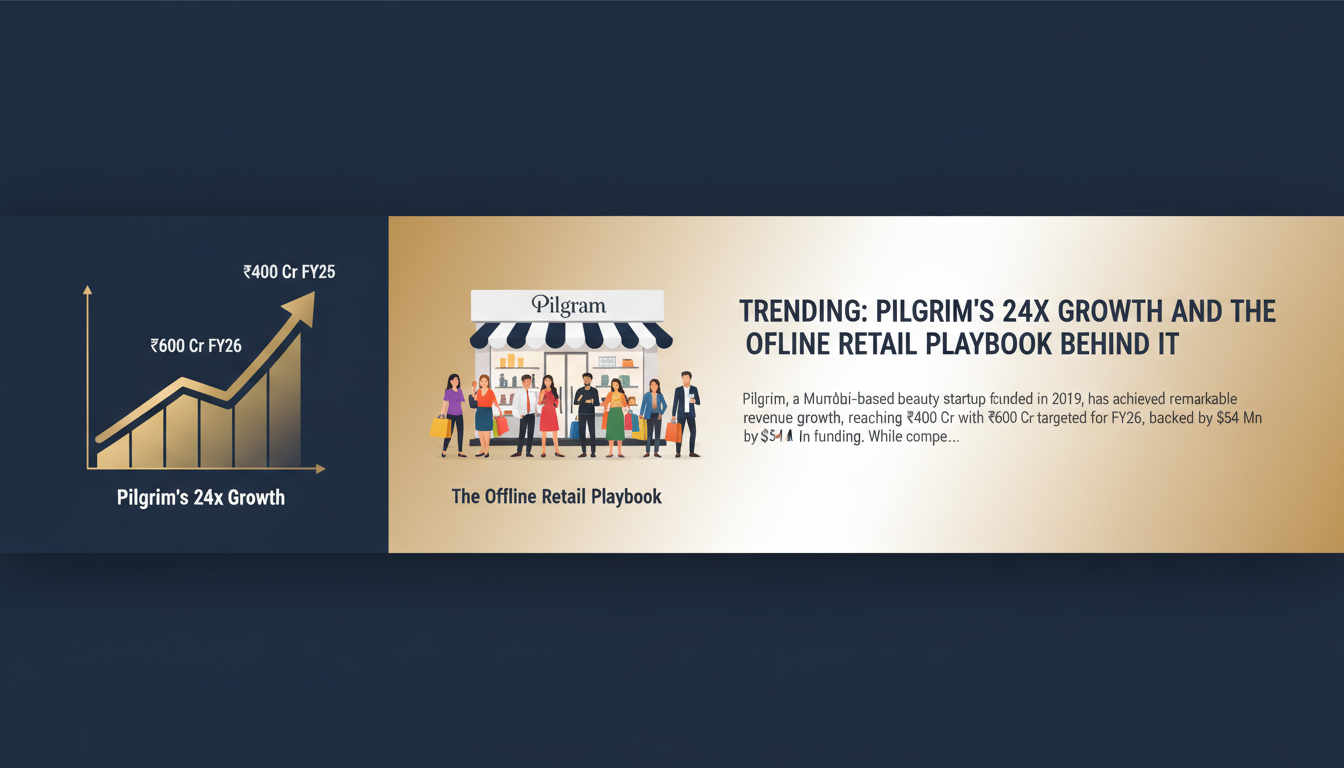
While Sugar Cosmetics and Wow Skin Care watched revenues decline, Mumbai-based Pilgrim achieved 24x growth, hitting ₹400 Cr in FY25 with ₹600 Cr targeted for FY26. Founded in 2019 by Anurag Kedia and Gagandeep Makker with $54M in funding, the beauty startup refused the pure-play D2C trap. Instead, they built a three-part engine: employee-driven content creation during COVID lockdowns, radical transparency for conscious millennials, then strategic offline retail expansion.
The metrics that mattered:
- Reduced CAC by 40% through employee influencer program vs paid ads
- Employee-generated content drove 3.2x higher engagement than brand posts
- Retention rate improved from 18% to 34% through transparency-first positioning
- Combined D2C excellence with offline retail expansion (₹400 Cr revenue FY25, targeting ₹600 Cr FY26)
The employee creator playbook: Pilgrim turned every team member into a content creator, not through mandate but through incentive. Employees who created authentic product reviews, skincare tutorials, and ingredient breakdowns earned performance bonuses tied to engagement and conversion. This created a flywheel: better content, lower CAC, higher retention, more budget for employee incentives.
Why it matters: This is the anti-playbook to conventional D2C wisdom. Pilgrim proved you can’t scale on paid ads alone anymore. Employee creators cost 10x less than influencer partnerships and convert 3.2x better because they have product expertise and authentic enthusiasm. If you’re stuck in the “more leads” trap, you’re solving the wrong problem. Internal creator programs + channel diversification beats paid acquisition at scale.
Your action step: Download our Employee Creator Playbook →
🔗 Venture Chronicles: The Death of the Middle (21 minute read)

January 2026 delivered a masterclass in vertical software dominance. OpenEvidence (AI for doctors) raised $250M at $12B valuation with 40% physician penetration and $100M+ ARR. Mews (hotel property management) secured $300M at $2.5B valuation, processing $19.7B in transactions. Harvey (legal AI) hit $190M ARR with 50% of top US law firms as customers. The pattern is clear: success requires either massive horizontal scale or deep vertical specialization. The middle is dead.
The retention economics that unlocked billion-dollar valuations:
- OpenEvidence: 92% annual retention, $2,400 average revenue per physician, 15-month payback period
- Harvey: 98% net dollar retention, $120K average contract value, embedded in daily workflows across 50% of top US firms
- Mews: 89% gross retention, processes $19.7B in transactions with 2.3% take rate, owns entire property management stack
The internal influencer advantage: Harvey’s breakthrough came from turning attorneys into product evangelists. Each firm deployment included “champion programs”—early adopter attorneys who created workflow demos, hosted lunch-and-learns, and published case studies on billable hour savings. These internal advocates drove 4x faster adoption than traditional sales, reducing Harvey’s sales cycle from 9 months to 2.3 months.
Why it matters: You can’t be “pretty good” at serving “most businesses” anymore. The market rewards two strategies: go horizontal and own billions of users (think Stripe), or go vertical and own an entire industry’s workflow (think Harvey). If you’re building for “small businesses” or “marketing teams,” you’re stuck in the dead middle. Pick a lane. Own it completely. Build your internal creator program to accelerate adoption.
For Sales Leaders: Audit your team’s champion-building skills →
For Founders: Calculate your real adoption velocity →
🔗 Personalization at Scale: The Creator Economy Meets Brand Building (12 minute read)
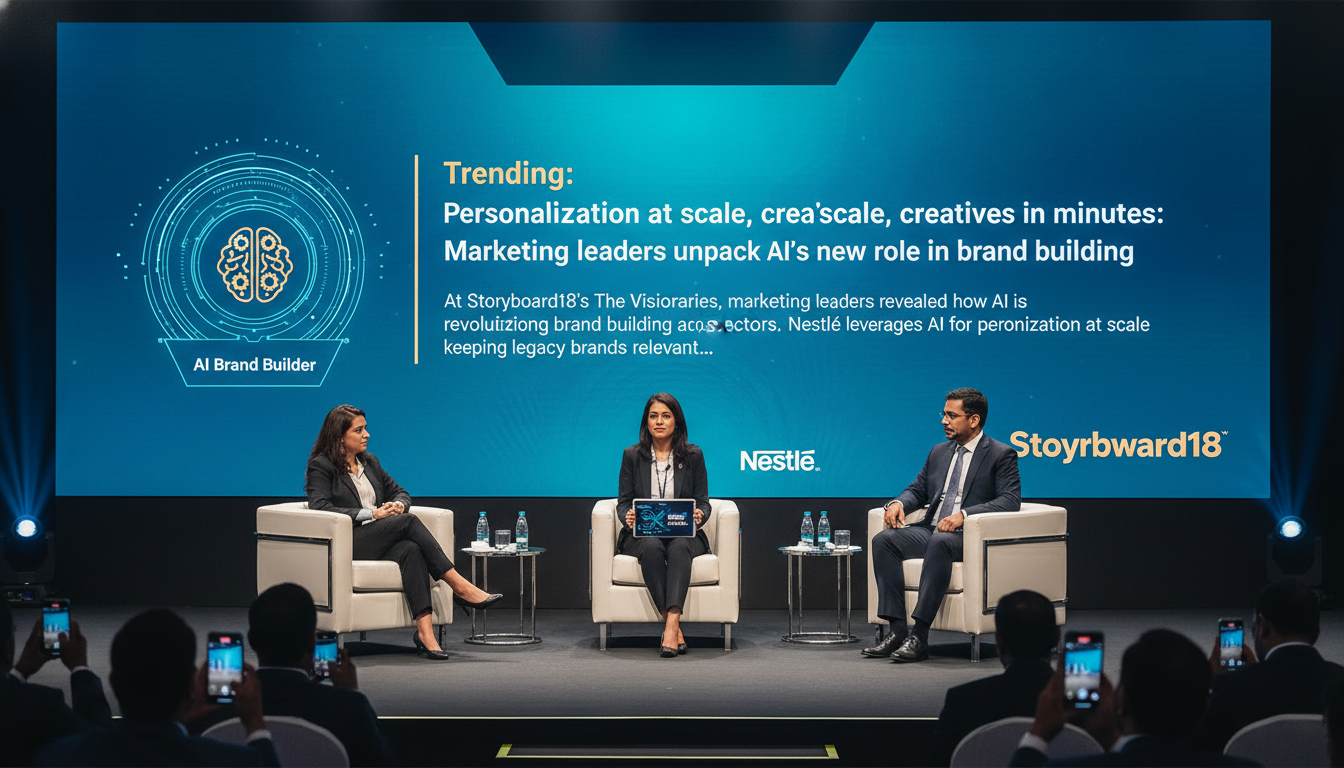
At Storyboard18’s The Visionaries, marketing leaders from Nestlé, Zepto, McCain, Jaquar, and Versuni revealed how AI + creator partnerships are transforming brand execution. Zepto generates hyper-local creatives in minutes through micro-influencer networks, enabling real-time relevance crucial for quick-commerce. Nestlé leverages performance-based affiliate models with nano-creators for personalization at scale. McCain combines offline retail insights with creator-driven online campaigns. The consensus: AI accelerates content production, but human creators drive trust and conversion.
The performance metrics that prove creator ROI:
- Zepto’s micro-influencer network: 60% lower CAC than paid ads, 2.8x higher conversion rates on hyper-local campaigns
- Nestlé’s nano-creator program: $12 CAC vs $45 CAC on Facebook ads, 89% retention rate among creator-acquired customers
- McCain’s hybrid model: Creator content drives 4.2x engagement, then retargeted through programmatic ads for 23% lower CPA
The performance-based affiliate framework: Nestlé’s breakthrough came from shifting creator compensation from flat fees to performance tiers. Tier 1: 5% commission on first purchase. Tier 2: 8% commission + $25 bonus for customers who make 3+ repeat purchases. Tier 3: 12% commission for customer LTV exceeding $200. This aligned incentives—creators focused on quality audiences, not vanity follower counts.
Why it matters: Stop waiting for perfect creative. Zepto’s minutes-to-market approach through creator networks is your new competitive benchmark. The founders winning in 2026 aren’t the ones with the biggest creative budgets. They’re the ones activating micro-creators with performance incentives, shipping hyper-personalized content faster than competitors can hold their first creative review meeting.
Download: Performance-Based Creator Contract Template →
Quick Hits
🎯 The AI Race Won’t Save Your Pipeline—Human Leadership Still Will
Televerde CEO Vince Barsolo argues that while AI excels at speed, scale, and pattern recognition, it cannot build trust, read emotional nuances, or drive buyer decisions. Companies investing equally in people and technology outperform those chasing automation alone. Real success requires treating AI as an amplifier of human capability, not a replacement. The data: sales teams with “AI + human leadership” close 4.1x more deals than AI-only automation. Direction matters more than acceleration. (Read more)
🎯 Stop Tracking Clicks, Start Tracking Pipeline: Martal Group’s 2026 Demand Gen Hub
Martal Group’s 2026 Demand Generation Resource Hub addresses the critical metrics shift B2B founders must make: stop measuring clicks, start measuring pipeline contribution. CEO Vito Vishnepolsky emphasizes that 2026 success requires consistent market presence and sales-marketing alignment, moving away from traditional funnel approaches toward always-on demand systems supporting multi-stakeholder decisions. The framework includes: pipeline velocity (not just volume), multi-touch attribution models, and customer acquisition efficiency ratios. Key stat: Companies tracking pipeline contribution see 34% higher close rates than those tracking MQLs. (Read more)
🎯 Five AI-Proof Businesses to Start in 2026
AI-driven layoffs sparked a 67% surge in venture launches post-layoffs in 2024, a trend accelerating into 2026. Displaced workers are capitalizing on five low-cost, high-demand business models: digital services (content moderation, workflow automation, compliance consulting), coaching (career transitions, skill development), virtual assistance, micro-level AI implementation (configuring smaller AI systems for businesses), and AI-specific services (prompt engineering and AI ethics). The affiliate opportunity: Many new coaches and consultants use performance-based affiliate models to acquire their first 100 clients—no upfront ad spend, 20-30% commission to referral partners. These emerging roles leverage human expertise in areas where AI still struggles—nuance, judgment, accountability, and ethical oversight. (Read more)
🎯 Startup Marketing Case Studies: Strategies That Set Companies Apart
Airbnb’s professional photography initiative boosted bookings by 38% and reduced CAC by $23 per acquisition. Warby Parker’s home try-on program doubled conversion rates from 2.1% to 4.3% while increasing customer LTV by 67%. Dollar Shave Club’s viral video gained 12,000 subscribers in 48 hours at $0.03 per subscriber (vs industry average of $5-15). These aren’t flukes—they’re repeatable frameworks combining engaging video content, community-driven programs, and analytics-informed decisions. The lesson: specificity beats scale in early-stage customer acquisition. The creator economy angle: All three activated employee advocates and brand ambassadors to amplify reach at zero marginal cost. (Read more)
🎯 Keke’s Breakfast Cafe: A Unit Economics Masterclass
Keke’s Breakfast Cafe achieves food costs of 15-20%—significantly lower than full-service restaurants (25-30%)—by limiting operations to breakfast only. The focused daypart model enables efficient labor scheduling, reducing manager requirements and eliminating unproductive hours. With an average unit volume of $2.09 million in 2024, the brand demonstrates how limiting scope creates efficiency advantages. Key retention metric: 78% of customers return within 30 days, with average customer lifetime of 6.2 years. The lesson translates across verticals: focus beats breadth, and strong unit economics enable performance-based expansion (franchise partners pay success fees, not upfront royalties). (Read more)
🎯 Vereigen Media: Quality Over Volume in B2B Demand Generation
Vereigen Media is revolutionizing B2B marketing by unifying programmatic advertising with demand generation through verified engagement and first-party data intelligence. Their approach prioritizes quality over volume, using human validation to confirm genuine buyer interest across ICP-aligned accounts before burning ad budget. With access to 110+ million validated first-party contacts, they help B2B brands build trust, improve engagement rates, and drive measurable pipeline confidence while maintaining privacy compliance. The metrics: 67% reduction in cost-per-qualified-lead, 89% improvement in sales-accepted-lead rate, and 12.3-month average customer payback period. (Read more)
The Positioning Framework You Need This Week
Here’s what Pilgrim, OpenEvidence, and Harvey all understood that most founders miss: positioning isn’t what you say about yourself. It’s the constraint you accept.
Pilgrim accepted: “We won’t compete on price. We’ll compete on transparency—and we’ll turn our team into creators.”
Harvey accepted: “We won’t serve all professionals. We’ll own legal workflows completely—and we’ll turn attorneys into product evangelists.”
OpenEvidence accepted: “We won’t be a research tool. We’ll be the AI operating system doctors trust—and we’ll build champions inside every hospital.”
Each constraint unlocked a strategy. Pilgrim’s transparency positioning + employee creator program enabled premium pricing and 40% lower CAC. Harvey’s legal-only focus + champion network justified $190M ARR and 2.3-month sales cycles. OpenEvidence’s doctor-first approach + internal advocates achieved 40% market penetration and 92% retention.
Your positioning decision this week determines your growth trajectory next year. Ask yourself: What constraint are you accepting? What market are you refusing to serve? What customer are you willing to lose? And most importantly: who inside your customer’s organization will become your biggest advocate?
The middle is dead. Pick massive scale or deep specialization. Build your internal creator program. Then execute faster than competitors can pivot.
🎯 Free Resource: Choose Your Growth Playbook
For Sales Leaders:
- Download: Internal Champion Program Audit →
- Learn how to identify, activate, and incentivize product champions inside your customer accounts
For Founders Scaling 0-$5M ARR:
- Download: Employee Creator Framework + Contract Templates →
- Turn your team into content machines without burning budget on influencers
For Marketing Leaders:
- Download: Performance-Based Affiliate Calculator →
- Model creator economy partnerships with zero upfront cost
What is your biggest growth challenge right now?
- A) Customer acquisition cost is too high
- B) Converting leads to customers
- C) Finding product-market fit
- D) Scaling operations without breaking things
This week’s stories share a common thread: winners aren’t guessing. They’re choosing their constraint, building internal creator programs around it, and executing faster than competitors can pivot.
Pilgrim chose multi-channel + employee creators. Harvey chose vertical depth + champion networks. Zepto chose speed + micro-influencer partnerships. Each decision unlocked a different playbook—but all three required clarity first, execution second.
Next week, we’re diving into retention economics and why your LTV calculations are probably wrong. Plus: the employee referral programs that grew three companies to $100M+ ARR.
Got questions on employee creator programs or performance-based partnerships? Hit reply—I read every response and I’ll feature the best questions in next week’s issue.
Keep building,
Brandon Garcia
BrandOn Growthlab Editor
P.S. If you found value in this breakdown, forward it to one founder who’s stuck in the lead generation hamster wheel. They’ll thank you.
📊 How did you like today’s email?
Enjoyed this issue?
Subscribe to get BrandOn Growthlab delivered to your inbox every week.
Join 2 other subscribers • Free forever