
Fund Your Growth: The 2026 Startup Playbook


|
Welcome to BrandOn Growthlab!
Most founders are solving the wrong problem. You think you need more leads. What you actually need is a system that converts them before they disappear in 8.25 seconds.
What’s in this issue:
- 🚨 Why your retention strategy is bleeding money (and how to fix it before you run out of runway)
- 🎯 The 4-step GTM framework that gets checks written—validate demand before you pitch investors
- ⚡ Speed wins: Why slow nurture sequences and untested products both kill startups
- 🔧 Brand vs. performance: Stop choosing and start tracking both
- 💰 Quick hits on AI infrastructure, legacy brand repositioning, and the $1.3B ethics warning
🔗 The Behavioral Shift Matrix: 4 Forces Reshaping Customer Retention (27 minute read)
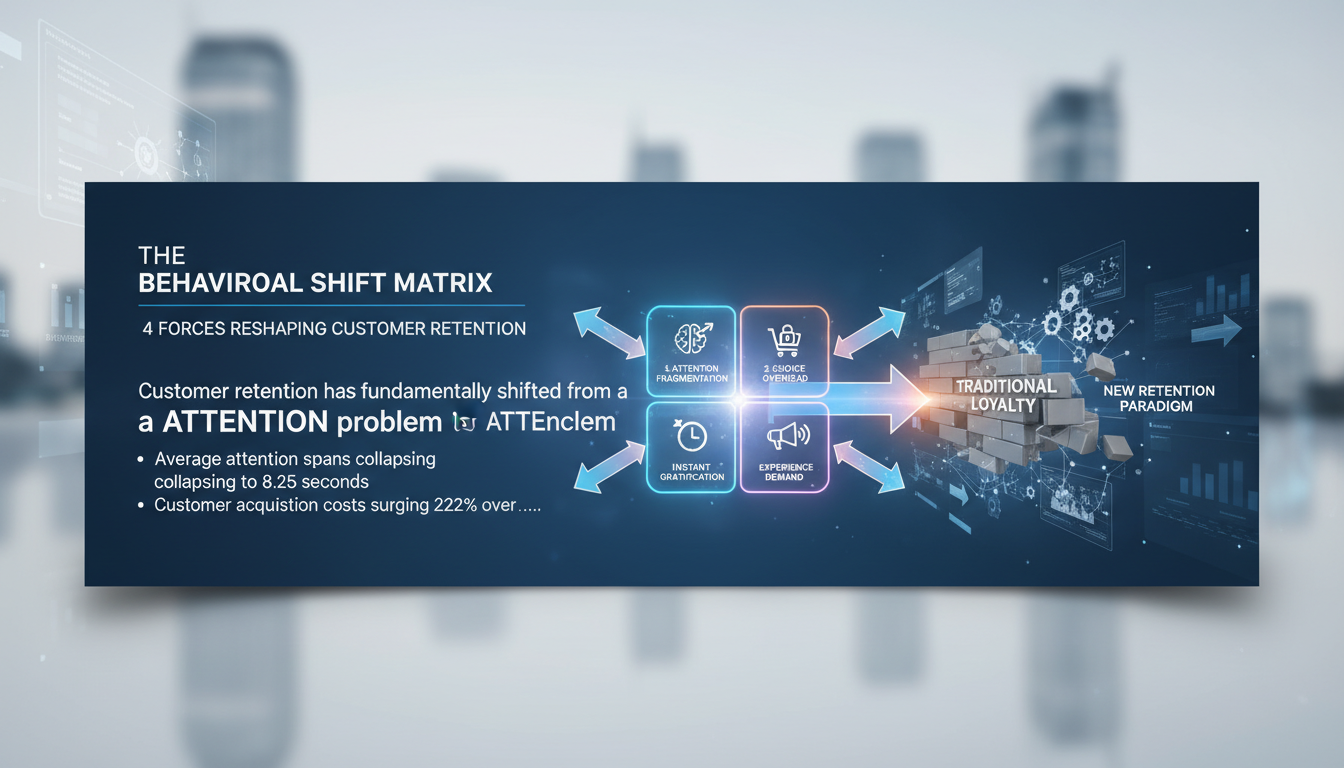
Customer retention isn’t a loyalty problem anymore—it’s an attention problem. Average attention spans have collapsed to 8.25 seconds while customer acquisition costs have surged 222% over eight years. Your slow nurture sequences are failing because customers continuously re-decide based on real-time context, not your 12-email drip campaign.
Key Points:
- Static retention tactics create a margin protection crisis: loyalty programs appear stable while revenue stalls and CAC bleeds you dry
- Behavioral intent now outpredicts demographics by a massive margin—AI-driven personalization delivers 82% higher conversion rates
- Success requires dynamic, micro-moment engagement that earns the next 8.25 seconds, not the next quarter
Why it matters: You’re burning cash on retention tactics designed for a world that doesn’t exist anymore. When attention spans drop to 8 seconds and your CAC jumps 222%, every wasted interaction costs you runway. The convergence of attention scarcity and expensive acquisition means you need to abandon traditional nurture sequences for immediate relevance—or watch your margins evaporate while competitors figure it out first.
🔗 4 Go-To-Market Moves That Help Startups Get Funded in 2026 (9 minute read)

Most founders pitch investors before they validate demand. That’s backwards. In 2026’s hyper-competitive landscape where 51% of VC funding flows to AI startups and over 100 tech companies hit unicorn status in 2025, your GTM strategy is make-or-break for getting funded. Goji Labs CEO David Barlev emphasizes tracking real user behavior before full launch to guide feature prioritization, pricing, and messaging—the exact data investors want to see.
Key Points:
- Define core users with clear interest signals—not demographic guesses—before building anything significant
- Build lean MVPs and run controlled experiments through beta programs to capture analytics on actual engagement patterns
- This data-driven approach prevents wasted development on unwanted features and accelerates product-market fit, the metric VCs actually care about
Why it matters: Investors don’t fund ideas anymore—they fund validated demand. When you walk into a pitch with real user behavior data, clear engagement patterns, and proven product-market signals, you’re not asking for a bet on your vision. You’re showing them the math. This framework gives you the four specific moves to execute before you ever schedule that first investor call, turning your pitch from “trust me” to “look at the numbers.”
🔗 How to build a go-to-market strategy for startups in 2026 (5 minute read)
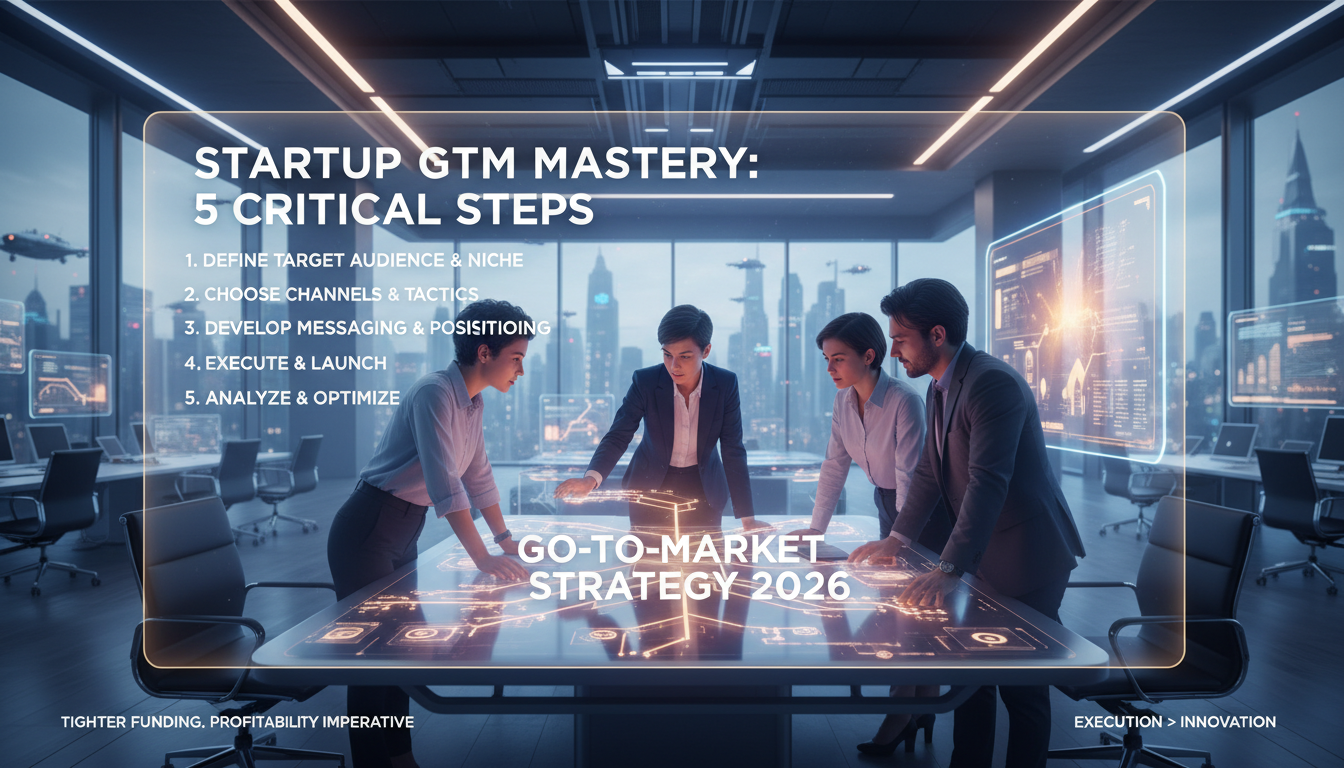
In 2026, startup success hinges on GTM execution, not just product innovation. With tighter funding and profitability demands, founders who can’t afford to guess need a clear playbook. This breaks down into five critical steps that separate funded startups from failed ones.
Key Points:
- Define precise target customers, craft differentiated positioning, and choose the right GTM motion (product-led, sales-led, or hybrid)—no room for vague personas
- Build channels strategically and track meaningful metrics: a healthy CAC:LTV ratio of 1:3 is baseline, not aspirational
- Winners won’t be loudest—they’ll be most aligned, with product, pricing, messaging, and distribution working seamlessly together from day one
Why it matters: Speed wins, but only when you’re moving in the right direction. This five-step framework gives you the GTM playbook for founders operating on limited runway and zero margin for error. When your CAC:LTV ratio hits 1:3 or better and your product-market-channel alignment is tight, you’re not hoping for traction—you’re engineering it. That’s the difference between burning through your seed round and building something that scales.
Quick Hits
🎯 The CMO’s guide to brand-building in the performance era
Stop choosing between brand and performance. This false dichotomy kills startups who sacrifice long-term positioning for short-term conversions, then wonder why their CAC keeps climbing. The modern marketing playbook requires integrating traditional brand-building principles with performance metrics—tracking both long-term equity and immediate business impact without sacrificing either. (Read more)
🎯 How AI Search Summaries Are Redefining B2B Demand Generation
Your content strategy is already outdated. AI search summaries are fundamentally transforming B2B demand generation by condensing buyer research and eliminating the visibility guarantee of high content volume. With 61% of B2B buyers preferring rep-free experiences, you can’t out-publish competitors anymore. Success requires identity-first targeting, intent-activated campaigns, and content optimized for AI systems—signal strength over content volume. (Read more)
🎯 AI agents could crush enterprise infrastructure, says Cockroach Labs CEO
If you’re building AI features into your product, your infrastructure will break before your product succeeds. According to Cockroach Labs CEO Spencer Kimball, 83% of tech leaders expect infrastructure failures within 24 months without major upgrades. Autonomous AI systems generate up to 5,000 database requests per second compared to traditional human-paced clicks. Downtime costs are brutal: 98% report one-hour outages exceed $10,000, with two-thirds citing $100,000+ hourly losses. Audit your scaling prep now before you hit production load. (Read more)
🎯 The $1.3B warning: Higgsfield’s racist AI scandal
Higgsfield hit $300 million in annual revenue run rate in just eleven months and reached a $1.3 billion valuation. They also paid creators to promote racist AI-generated videos, circulated stock footage as AI content, and face payment issues plaguing their creator program. Your brand reputation is your only moat when scaling fast. Growth-at-all-costs without guardrails doesn’t just damage your brand—it destroys it. (Read more)
🎯 Branding for venture capital versus startups
VCs and startups operate in the same ecosystem but play completely different games. VCs sell judgment to limited partners over 10-year cycles, while startups sell solutions to customers on 12-18 month fundraising timelines. Your startup can’t brand like a VC. You need founder-led narratives, one focused message, and protection of your core mission while remaining flexible on tactics. Understanding your timeline, metrics, and budget constraints is essential for building trust in uncertain markets. (Read more)
🎯 The DeepSeek-R1 Effect: Efficiency over capital
DeepSeek built a competitive AI model for $6 million, shattering the assumption that more capital equals better AI. For bootstrapped founders evaluating AI strategy, this reframes the competitive landscape: model efficiency beats GPU spending wars. Focus your limited resources on strategic implementation, not trying to outspend OpenAI. (Read more)
This Week’s Action Items
Audit your current retention tactics this week. Track how long it takes you to follow up with new leads. If it’s more than 24 hours, you’re losing money in the attention economy. Fix that first.
Implement one GTM validation experiment before month-end. Pick your riskiest assumption about your target customer and design a lean test to validate it with real user behavior—not surveys, not focus groups, actual engagement data.
Review your CAC:LTV ratio. If you don’t know what it is, calculate it this week. If it’s worse than 1:3, you have a margin problem that no amount of new leads will solve. Focus on retention and pricing before you spend another dollar on acquisition.
The retention crisis and the GTM validation framework aren’t separate problems—they’re two sides of the same coin. Slow nurture sequences waste attention you can’t afford to lose. Untested products burn runway you don’t have. Speed wins when you’re moving in the right direction with real data guiding every decision.
This week, pick one: fix your follow-up speed or validate one core assumption. Both will move you closer to the metrics that actually matter—the ones investors look at and customers vote with their wallets.
Keep building,
Brandon Garcia
📊 How did you like today’s email?
Enjoyed this issue?
Subscribe to get BrandOn Growthlab delivered to your inbox every week.
Join 2 other subscribers • Free forever